Monday, June 09, 2008

MOLES AND VOLES AND SHREWS, OH MY!

A face only a mother could love


The children’s book, “Arthur, for the Very First Time,” by Patricia MacLachlan, begins with a chapter titled “Moles.”

“What do moles look like?” asked Arthur.

“Ugly,” said his father.

Arthur wrote in his journal: Moles: ugly

“And they always come no matter what I do!” said his father angrily.

Ugly, but loyal.

The same day that I read that chapter to a class of second graders, I ran into a friend in line at Home Depot. “You should write about moles,” she said. “They’ve invaded my garden, killed a new fifteen dollar ginger plant from the roots – overnight. It was just like in ‘Caddy Shack’!”

A few days later, while I was taking Bell for a spin around the backyard, I encountered the mortally wounded, though quite recognizable, body of a mole.

It was fate. I asked my friend Linda Christine to give me the name of our local mole expert, and she sent me to Bill Hayes. Bill is a Master Gardener and plant lover, and he has a talk that his gives about moles and their fellow burrowers, voles.

Moles, he begins by saying, are misunderstood. They may not be loyal, as Arthur suggests, since they are solitary creatures who do not tolerate company; but they are not all together bad since they are not rodents, only eat insects and aerate the lawn. They are therefore beneficial to your garden, unless of course you want to grow something. Then they are pests and must by eliminated, according to Bill.

Moles can move fast, and when tunneling, will often surface, creating a volcano like mound of dirt. This differentiates the mole from the vole.

“The moles’ main food is the earthworm and they will follow the worm,” writes Bill. “That’s why most of the tunnels are at the surface during cool wet weather. The worms like to come up to the surface into soft wet grass. In times of drought we get fewer calls about moles. That’s usually when the surface temperatures are hot and harder than usual. Some homeowners contribute to the problem by over watering and creating the perfect mole/worm environment.”

That’s another reason not to overwater.

You can tell a mole is there if you see a raised tunnel that you hit with the lawnmower. The grass above the tunnel may be turning brown, and your feet may sink into the surface in several locations.

There are many old wives tales about how to get rid of moles, but most of them don’t work, says Bill.


The only way to get rid of moles is to “trap” them!

Trap is in quotation marks because you do not trap them with traps, you kill them, he says.

With names like “harpoon”, “scissors”, and “strangle”, the traps are pretty clear about their purpose.

There is a set of procedures or steps that you must follow to catch the mole.

1. Flatten all mole runs (tunnels). Use your feet or rent a roller. You must locate the primary run. The primary run will lead to the mole’s den or resting place. It is usually in soft soil around a flower bed.
2. Wait 24-48 hours
3. Return to your yard with enthusiasm and locate the active runs.
4. The primary run should be the longest with several shorter runs coming off of it.
5. Insert and set the trap in the primary run close to the den according to instructions.
6. Wait about 24 hours.
7. Exhume mole and discard.

You will now have free time to do other chores until the next mole moves in.

Kind of cute - if you like rodents.

Then there are voles. There are two kinds of voles around Aiken. The pine vole lives below ground and feeds on the roots of plants. The meadow vole (also known as a meadow mouse) lives above ground and eats succulent plants such as hostas, cannas, elephant ears and anything else that you treasure in your garden.

Unlike moles, the voles are sociable critters. They live in large colonies and can do severe damage to a garden or to large plants. Pine voles’ exit holes, resembling those of a snake, can be found around azaleas, camellias or other large plants that they are eating. They eat bulbs, tubers, seeds, and bark

Meadow voles are typically a little bigger than their cousins and live in pine straw piles and other vegetation and return to this vegetation after feeding. They eat grasses, sedges, seeds, grain, bark, and some insects. Both types of voles can be caught with mousetraps.

Bill suggests that it was probably a pine vole that got my friend’s ginger plant.


Meadow voles live in pine straw piles and other vegetation and return to this sanctuary after feeding. Both types of voles can be caught with mouse traps. Care should be taken to avoid poisons that can be eaten by cats or dogs.

Pine voles can be tricked into coming to the surface by creating an artificial tunnel above ground. Place a raised object like a box, pail or roofing shingles over the exit hole and put a few small pieces of apple under the cover. Put a weight on top of the cover to keep any light from entering. The vole will enter the space and eat the apple. After baiting the area for a few days, place a mouse trap in the space baited with apple. You should be able to trap several before they stop coming.


The easiest way for me to tell the difference between a mole and a vole is by the size of their feet. Voles have tiny feet proportional to their size, and they are actually kind of cute – if you like rodents. Moles have feet that look like the mole version of clown feet – without the shoes. I guess to dig that fast, you have to have special equipment.

For the record – I know there are moles and voles around my yard, since I’ve seen them. I haven’t noticed any damage, so I am willing to let them be, but if they are damaging your lawn and garden, you must choose whether or not you want to fight them. That will mean killing them using some kind of trap.

Once you have rid your lawn and garden of moles and voles and shrews (which can also do damage), or you have decided to coexist peacefully with them, you will have a chance to sit down and read. Try reading “Arthur, for the Very First Time” to your favorite elementary school student. It is a beautifully written book I nearly missed.

Tuesday, October 30, 2007

Atlanta May Not Have Water, But It's Got the Varsity

“It’s hard to imagine civilization without onions,” said Julia Childs. Spaghetti Sauce, pot roast, enchiladas, potato salad, cornbread dressing, the list goes on for miles. Onions are a staple in our diet, no doubt about it.
Allium cepa, the common garden onion, is consumed at a rate of approximately 21 pounds per year per person in the United States, and a half cup of chopped, raw onion contains one gram of fiber and 5 milligrams of vitamin C. What more delicious way to ingest those necessary nutrients than in an order of that great comfort food - fresh, hot Varsity Onion Rings?
Having made the three hundred mile round trip to Atlanta three times in the past three weeks (one funeral, one wedding, and a reunion) Hank and I felt that a trip to the Varsity was the least we could do for ourselves.
The Varsity, we are sure, is as much a part of our shared family tradition as Thanksgiving dinner or church on Sunday. My parents went to the Varsity on dates, when chili dogs were two for a nickel, long before it became necessary to negotiate the harrowing, ever evolving, mass of interstate highway that surrounds downtown Atlanta.
My daddy would take us there when we were kids, and we’d eat in the car, since only old men and Tech students ate indoors. He was very particular about the condition of his cars. “This car will smell like a weenie joint for a week,” he’d complain. But it was worth it, even to him. As a teen-ager I made more than one spin around the parking lot in a souped-up Chevrolet, and Hank and I went there on a few dates ourselves.
So, we went on Friday, and enjoyed once again together the unmatched flavor and perfect texture of a Varsity Chili Dog and side of Rings. It was just as good as we remembered.
Since I moved away from Atlanta, I’ve noticed that there are certain topics that seem to be on everyone’s mind at any given time. For years that topic was the fearsome, eternal traffic. Traffic that was getting bad when I lived there forty years ago, is now nearly intolerable.
There’s a new worry on everybody’s mind these days. That is the problem of water. “We were supposed to get four inches,” my Uncle Jeff said, when we stopped by for a visit. The sky was already growing lighter on a day that was to have been filled with thunderstorms. “Instead we only got a half inch, if that. It’s the worst drought since 1931.”
There are water restrictions so intense that neighbors turn each other in, and if you dare appear to be extravagant, you risk having your water turned off with a thousand dollar fine to have in turned on again.
Aunt Faye, a dedicated gardener, has maintained the small garden of their condo with efficiency, having saved the latest advice from Georgia’s garden guru Walter Reeves, and having come up with some ideas of her own. She passed the paper along to me.
“Make better dirt when you plant and dig deep,” says Reeves. The soil’s moisture is more constant the deeper you dig, and you should amend the soil around your new planting with plant matter.
Spread a double thick blanket of mulch. “Stay away from hockey puck sized nuggets,” he said, “and stick to mulch that’s more finely textured.”
And, speaking of mulch, here’s a hint from the Terminix man I talked to a few weeks ago. Cockroaches, or as we South Carolinians say, “Palmetto Bugs” are attracted to many kinds of mulch that we use near our homes, taking a thick blanket of pine straw or pine bark as a welcome mat to come on inside, BUT they don’t like cedar mulch. So he advises, if you’re planting near your foundation, use cedar.
Aunt Faye plans to work some type of “water grabbers” into the soil around her pansies when she plants them. I’ve had good luck with these in potted plants. I expect they’d work the same in the ground, though it might get expensive if you have a lot of plants.
I’ve also heard many people talk of using dishwater or shower water, if you have a way to capture it, to water plants. It seems a good idea, and I can’t find any advice against it. One thing I read said that dishwashing liquid won’t affect the pH, but that detergents from the clothes washer might and that it might be illegal to water with what’s called “gray water” anyway.
I expect be the time we make that trip over I-20 again, the leaves will finally have changed and fallen off, and North Georgia will, I hope, have come up with some long term solution to its water shortage. Georgia’s problems should be an object lesson for us. We are fortunate here in Aiken to have a good source of water, but it is not endless. As gardeners, we must consider more sustainable, adaptable garden practices. As citizens we need to be sure that our state’s and city’s growth is planned around the resources available to us.

Tuesday, October 16, 2007

You Can Take A Ride Around Aiken's Old Downtown


“At the request of Major Alex Black Ag’t of the S. Carolina Canal & Rail Road Company we have surveyed and laid off 27 Squares or Blocks in the Town of Aiken bounded on the North by Edgefield St., on the East by Williams St., on the South by Rail Road Avenue and on the West by Newberry St, as in the above plat represented – This 19th September 1834.”
(signed) Cyril O. Pascalis
(signed) Andrew Alfred Dexter

And so Aiken was born. The plat that Pascalis and Dexter, two of Aiken’s resident engineers, refers to shows twenty-seven neatly ordered rectangular blocks, lined up in three rows of nine, where the first residents of Aiken would build homes and shops and around which our beautiful, vital city would soon grow. The outer perimeter of the city went from South Boundary on the south, Charleston Street on the east, North Boundary (now Hampton Avenue), and West Boundary (now Florence Street). The railroad ran down Railroad Avenue, now Park Avenue. The streets were one hundred fifty feet wide and lots, which we would call city blocks, were four acres. Could those first citizens have ever imagined what good things would come of Aiken in the next one hundred and sixty-three years?

To get an idea of the size of Aiken in its infancy, you can take a short drive around the perimeter of those twenty-seven blocks, starting in front of the Washington Center at 124 Newberry Street, a relatively new building that stands comfortably beside the century old Aiken Club Room and Court Tennis Building.

Stop at the lights that cross Richland Avenue and continue north past St. John’s Methodist Church. This active and ever growing church has been doing the Lord’s work here in Aiken since before the turn of the century (the last one).

Continue up Newberry and before you turn right on to Edgefield Avenue, have a look north. It’s peaceful vista with wide parkways and comfortable homes that very likely hasn’t changed much over the past century.

Turn right onto Edgefield Avenue and continue as far as you can. At Kershaw Street, you’ll come to the sprawling campus of Schofield Middle School, another of Aiken’s historic sites.

The Schofield Middle School website tells us that Martha Schofield, a young, determined Quaker lady from Buck’s County, Pennsylvania came to Aiken following the Civil War in order to help educate young Negro children. With help from the Society of Friends and others throughout the state, she was able to have begun one of the most important schools for Negroes in South Carolina. The original building here was completed about 1870. There were sixty-eight students and a total of three staff members. Schofield has grown considerably since then and has recently been renovated into an attractive modern building that sits on grounds that cover several of Aiken’s original twenty-seven blocks.

To get around the school, turn left onto Kershaw Street, then right onto Abbeville. When you reach Williamsburg (called Williams in the original plat) turn right and you’ll be back on the perimeter road. If school’s out, on the weekends or after 3:30, you can stop and have a look at the park and Wetlands project established several years ago on the grounds of Schofield Middle School. Listen for the bullfrogs and watch other tiny frogs skitter across the pond abounding with water lilies and purple flowering pickerel weed.

Continue south on Williamsburg, crossing Richland Avenue. On your left, you’ll see the Aiken Farmers Market, bursting with activity if you happen by on a Saturday morning. When you reach Park Avenue, called Rail Road Avenue in the original plat, you’ll face the railroad track and remember that, like many towns across the country, the railroad was in large part responsible for Aiken becoming a town.

Ride several blocks and look to your right and you’ll notice something new growing out of the old Aiken setting. Five new, beautifully landscaped Charleston type houses invite folks to sit a spell on a side facing porch, originally designed to catch the sea breezes that blew in from Charleston harbor.

Keep driving, past the old caboose and railway cars that are soon to be part of the Aiken Depot project and you’ll come to the first of several blocks of shops and galleries. If you’re lucky you’ll encounter Bill Jackson in his beautiful and ever evolving garden. You can stop and look in, through the wrought-iron gate and notice the outstanding collection of Japanese maples and unusual sculpture that could be at home in any big city.

You can’t see the train for much farther here. A railroad cut that takes it below street level was completed in 1852.

Keep going and you’re almost done. Pass more magnolia filled parkways and stop for a minute to look south at handsome St. Mary’s Catholic Church and then at the Aiken County Courthouse and the monument to the Confederate dead that stands in front of it.

Now past the antique shop and the Chesser building and you’ll find yourself back at the Court Tennis Building, one of only eight active Court Tennis courts in the country.

These twenty-seven blocks, still identifiable after over a century and a half after they were first laid out, remind us of Aiken’s artistic and educational and agricultural and horticultural and religious heritage and why I think those first Aiken citizens would still be happy to call Aiken, South Carolina “home.”

Friday, October 05, 2007

All You Ever Wanted to Know about Naked Ladies


“In the South, fall comes like a second spring, but with decidedly tropical overtones…It’s as if a gentle breeze from Africa had blown into the garden to awaken the inhabitants. This rich and rewarding season includes a surprising number of bulbs,” says Scott Ogden in his book “Garden Bulbs for the South”, published in 1994, with a second edition in February, 2007.

Take a ride around town or into the countryside and you might spot a row or a patch of one of the bulbs Ogden tells us about. Lycoris radiata is the botanical name of this handsome red flowering, fall blooming bulb that reminds us of the native azalea, with its long, feathery stamens. The stems are graceful and slender.

In his book, Ogden goes into great detail to explain to us the origin of this handsome flower. In the South, he says, they were long referred to as Guernsey lilies because of the similarity to another lily, Nerine sarniensis, that is said to have washed up after a shipwreck onto the island of Guernsey, one of the Channel Islands between England and France, where it thrived.

Our Lycoris radiata is quite a different genus altogether. Nerine lilies are better as cut flowers, but don’t grow well in America. Lycoris, on the other hand, is quite comfortable in our hot, southern climate.

“Lycoris,” by the way, he says is correctly pronounced LYcoris, if we are alone or among botanists, but that we would probably say liCORis if we want to be understood around other gardeners.

As for the preponderance of names for this handsome flower, we shouldn’t call it “spider lily” lest it be confused with Hymenocallis or Crinum, so we must call it “Fall Spider Lily.” It may be called “Hurricane Lily” since it often comes into bloom during hurricane season, or, since the Lycoris come into bloom without accompanying foliage, it is fancifully and properly, and, I suppose, uniquely called “Naked Lady.”

Studies performed by geneticists found that the old Southern Lycoris, probably itself an import, is a triploid, meaning it has an extra dose of chromosomes. This gives it tremendous vigor and hardiness, but also makes it sterile. After World War II, commercial growers in Japan began supplying American dealers with Lycoris at inexpensive prices. They are fine bulbs, says Ogden, and the flowers of the diploid types come into bloom a few weeks earlier than the triploid. If you’re lucky enough to have both types, you may have Naked ladies around your garden for a month.

We can plant Lycoris radiata in well drained slightly acidic soils (perfect for Aiken), in a woodland garden among trees or in borders of shrubs or in full sun, though full sun can cause premature withering of the delicate flowers. All Lycoris like soils enriched with leaf litter and humus. If you are fortunate to have some of the old garden varieties passed along to you, you may plant them in soil with more clay. Five to seven flowers appear on each stem, and after the flowers have withered basal leaves appear and deteriorate by the following summer.

Divide Lycoris in spring and don’t be surprised if they take a year off before blooming again. Naked ladies can be persnickety.


There are several similar species of Lycoris: golden spider lily (L. aurea), white (L. albiflora), salmon/orange (L. sanguinea). Another close relative, (L. squamigera) has more typical lily-like flowers that are light pink.


You can get Lycoris radiata bulbs now at Cold Creek Nursery here in Aiken. Plant them now and you should have flowers next year, but remember to mark them. The strap like foliage that comes up unattached to any flower might fool your highly efficient yard man into thinking it’s a weed. He’ll whack it, and you know the rest - no leaf, no photosynthesis. No photosynthesis, no flower. It, I am sad to say, has happened to me.

Finally Fall


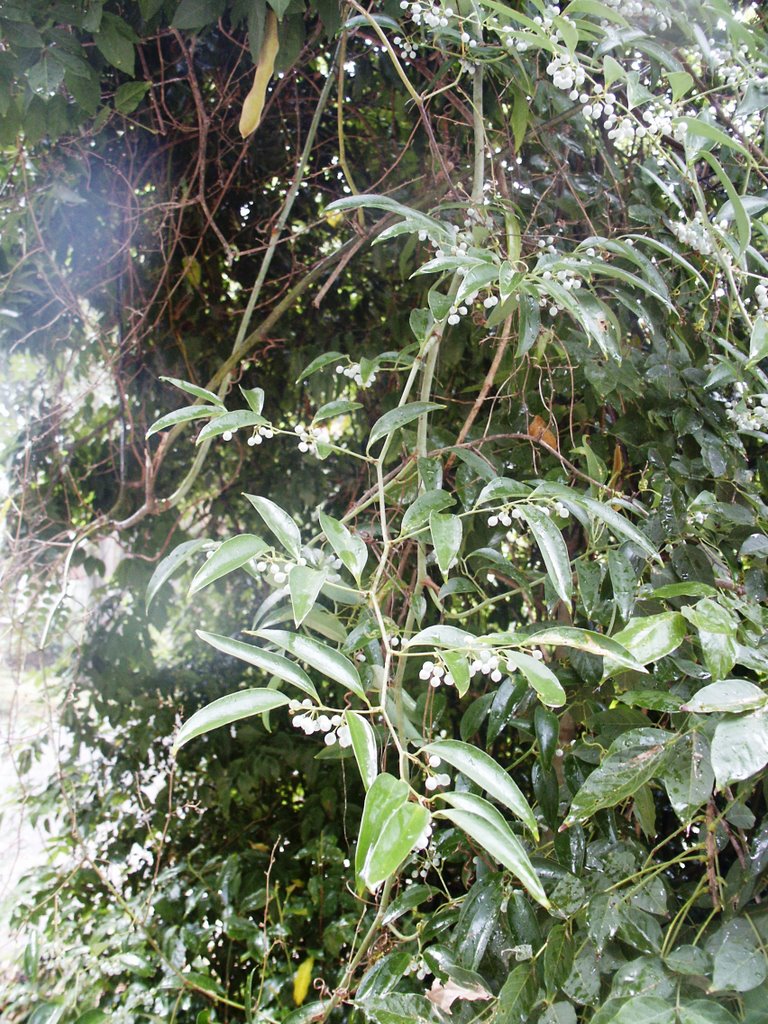
Aiken is blessed with a number of good nurseries that offer handsome, healthy plants for our fall planting. One of them, Woodlanders offers many unusual and sometimes rare perennials, vines, shrubs and trees. I stopped by the nursery the other day and saw at least a dozen plants I was dying to try. At the top of that list was a vine called Evergreen wisteria. If I’d heard just the common name, I’d probably have stomped the thing to death, since I have spent the last twenty years trying to get wisteria out of my yard and wouldn’t think of introducing another Wisteria. Fortunately, Woodlanders never leaves us with anything so common as a common name, and I found that this plant isn’t another evil cousin in the wisteria family, but a more mannerly Milletia reticulata.

This Milletia is a vine that has beautiful deep purple flowers that bloom about now on racemes that resemble those on Wisteria and leathery dark green compound leaves that stay on through the winter. It has twining stems that grow twelve to fifteen feet or more and needs good support. It also needs full sun and regular watering. It is hardy down to zero degrees.

I can’t find anybody with a bad thing to say about Milletia reticulata, though I think it’s good to remember that it is not native to this area, but to China, and that probably when people first planted Wisteria here they didn’t know how invasive it would become. In any case, it’s a beautiful plant for a late summer show.

Years ago when I visited a Spring sale at Woodlanders, I asked Robert McKintosh, one of the nursery’s founders, if he could just buy one plant, a perennial, not a tree or shrub, what would it be. He answered without hesitation, “Lobelia Cardinalis.”

Lobelia Cardinalis (wasn’t there an Italian movie star with that name?) or Cardinal flower, as it’s also called, grows in clumps one to three feet tall, with tubular flowers that are the reddest red in your flower bed.

It’s a plant native to North America from New Brunswick west to Minnesota, and south to central Florida and eastern Texas. It grows in moist meadows, bogs and stream banks, so it needs moist soil and will even tolerate flooding, but not drought, in full sun to partial shade. If you grow it in ordinary garden soil, keep it watered.

Among the best things about this flower is that it’s pollinated by the ruby-throated hummingbird, and I’m told they are attracted to it in droves.
If you end your spring or fall planting season with a garage full of empty black plastic nursery pots that look like they will outlive the planet, recycle them! Woodlanders asks us to put our recyclable pots inside the gate on Beaufort Street. Cold Creek Nursery and Palmetto Nursery will take them also.
Sam Stephens at Palmetto Nursery has snapdragons ready, as well as lettuce, cabbage, broccoli, collard, and onion plants. Pansies will be ready about the second week in October.

Tuesday, July 24, 2007

The Christines' Heavenly Garden Offers Many Scenic Views


I paid a visit to the Kalmia Hill garden of Linda and Sam Christine the other day. Even though I visit several times a year, there's always something new to see.
Sun coleus invites you to stroll in, past the old iron bed Linda found at the dump and painted blue

Duranta Erecta - Sky Flower, Pigeonberry or Golden Dewdrop, dies back in winter the resprouts in spring


Clerodendrun Ugandense - Blue Butterfly Flower also dies back in winter, but so far has survived our Aiken temperatures (zone 7)


Pineapple Lilies


Stargazer Lilies


And a pot of purple

A Love of Gardening Should Be Passed Along

My Grandmother Remelle Wilhite
My mother taught me many things. She taught me how to fry chicken and bathe a baby and make a prom dress and many other necessary skills that I’ve been doing so long I forgot where I learned them.

She did not, however, teach me but one thing about gardening. When I bought my first twelve pack of pansies to plant in the three by three foot square of red dirt next to our apartment in Stone Mountain, she suggested I work in some “woods dirt” from my grandmother’s yard to improve the soil. The hard red clay was not likely to inspire my pansies to perform at their best she said. It was a valuable lesson, but it was the only lesson.

Though she would attack indoor dust and dirt with inspiring vigor, she did not like to get dirty outside. She planted hydrangeas along one side of the house in Decatur and climbing roses across the back fence and that was all. Whatever foundation plantings came with the house when we moved in when I was thirteen were only replaced once in the thirty-five years my parents owned the house.

Her mother, my grandmother, on the other hand, must have enjoyed gardening, and shared her pleasure in it with me. She had lived most of her adult life in the city, but was not far off the farm, and, after my grandfather retired, she moved with him to Stone Mountain when it was still rural Georgia.

I remember digging potatoes with her in a small field where the soil was enriched by the chicken manure from my grandfather’s chickens, and I can see myself and one or two cousins dunked in a bath of something lethal, to get rid of chiggers after a morning spent picking blackberries on land that stood between her house and Stone Mountain,. In an old photo, taken at a family gathering in the early fifties, I can pick out canna and aspidistra near the mortared granite pillar beside the porch, and in one of her letters, she mentions planting “hollyhawks.” In another photo I have on my desk, taken when she was in her seventies, my grandmother stands smiling under an arbor of lush, pink roses that she must have tended herself.

I have one brother who started gardening late in his life and only after he had been married for some years to a Tennessee Farm Girl who had to explain to him exactly what "compost" is.

Now he understands what compost is, AND the importance of horse manure, and even better, when it comes from you own horse. So every year this brother, who grew up in the same household with the same mother as I, puts in tomatoes, pole beans, turnip greens (he has finally learned to love them in his mid 50's) and swaps them with neighbors and friends for watermelons and cantaloupe.

Nothing like your own garden, he writes. Nothing like your own "stuff" just to give to friends, eat for yourself or "put up".

Then another brother, the youngest, says the only gardening advice he remembers is, "You’d better get that grass cut by the time I get home." By the time he got old enough to hold a hoe, our grandfather had died and our grandmother had moved to a smaller house where there was no potato patch.

I always wished that my children and their children could have the experience of spending time on a farm as I did, but we’re city folks so they must settle for a bit of a garden where they can find it. My grandson and his parents and little brother have just moved into a new house in Florence with a lush, green yard. The house came neatly landscaped with manicured shrubs and a tree or two, but over in one corner, up against the back fence, is a rectangle of bare soil that measures about three by seven feet. The first thing three-year-old Aiden showed me when we visited a few weeks ago was this spot. It was nothing but a patch of dirt at the time, but he got out his “shuggles” and began to dig, moving the dark PeeDee dirt from one end of the plot to the other.

This weekend we planted a garden in Aiden’s corner. It’s a heavenly place, with Sunflowers, perennial and annual, Moonflowers, a few watermelons, and seeds for pumpkins. I think, as enthusiastic as I was about the plants, he would just as soon have spent his time digging, but, when the moonflowers start to bloom, I’ll read him Jean and Peter Loewer’s beautiful book, Moonflower, that tells the story of a moonflower vine and all the night creatures that are drawn to it, and I’ll be sure that he notices when he wakes up one morning to find that the yellow flower at the end of the watermelon vine has become an egg shaped green fruit.

“How long until Aiden's big enough to lift a fifty pound bag of pine bark?” asks my youngest son, just to be sure I don’t get too serious about this issue. “Uncle Dave is ready to turn over that piece of his childhood to the next generation.”

Maybe a love of gardening runs in families, like twins or red hair, but isn’t bestowed on everyone equally. Or, maybe, it’s more like Aunt Bessie’s silver tea service - a family treasure.

Friday, July 06, 2007

Some Roses to Take the Summer Heat


While our hybrid teas and polyanthus are taking a breather during the hottest part of the summer, there's another rose blooming now, not of the genus Rosa, that revels in the heat. That is the Rose of Sharon, also called "Althea." The name comes, I suppose, from the Rose of Sharon referred to in the Old Testament's Song of Solomon. Though there are, I read many flowers thought to be that rose, Hibiscus syriacus is the one to which the name stuck. It's also called "Althea."

‘White Chiffon’ Althea or Rose of Sharon is blooming now in the back bed. ‘White Chiffon’ is a relative of the old Rose of Sharon shrub that used to bloom in your grandmother’s garden, but so much better. With flowers that resemble those of cousin tropical hibiscus, which won’t survive our winter, these Hibiscus syriacus hybrids are hardy to -15ºF. They are also deer resistant, and heat and drought tolerant. They are deciduous and may be heavily pruned in late fall or early spring. The varieties offered by Proven Winners other than the Chiffon series include the Satin series- Blue, Blush, Violet, and Rose.

‘White Chiffon’ has delicate, 3-inch single white flowers with lacy centers, almost camellia-like. It will grow from six to eight feet and spreads to six feet. There is a pink variety called ‘Lavender Chiffon’ as well.


Besides its wide open appearance, this Hibiscus has other differences with the old-fashioned Altheas. The older varieties were notoriously invasive, since they bore hundreds of seed pods which were easily spread by birds and then sprouted willy-nilly all over the country. In addition, the spent blossoms would fall from the shrub and leave a sometimes slippery mess. Some folks considered it a weed.


‘White Chiffon’ is a hybrid that shouldn’t even be propagated without a license, so it won’t be included in the next edition of Passalong Plants, and it shouldn’t take over your perennial bed.
A walk around the block shows me that I’m not the only one to have discovered this great midsummer flower. ‘Lavender Lady,’ still bearing her label, is blooming now in the garden of a neighbor. It is more nearly pink than lavender, with a deep maroon center and pronounced stamens that beg for the attention of passing hummingbirds. There are other varieties as well. The Chiffons are available at Cold Creek Nursery.

Thursday, June 21, 2007

Another Good Reason to Live in Aiken


There is no more perfect time of year, I think, than these gardenia-scented days of June. The promise of a bouquet of fresh blue hydrangeas and creamy white gardenia blossoms beside a bowl of peaches, still warm from the stand, is what keeps us going through the dreary days of February.

Once warm weather arrives, it’s always a fun to see what handsome combination of plants city Horticulturist Tom Rapp has come up with for the parkways and beds around Aiken. He has so much territory to cover these days, he has to choose plants that are reliable, drought tolerant and pretty showy as well. Imitating Tom’s beds is a safe bet when choosing plants for our home gardens.

Aiken’s signature fountain this year has two annuals to grace the feet of the laughing children who stand for eternity beneath the umbrella at the corner of Laurens Street and Park Avenue.

Against a backdrop of boxwood that stays there year round, Tom planted Pink Dragonwing Begonia and Alternanthera ‘Purple Knight.’ In this and other city plantings, the bed begins with a fresh layer of Bricko Farms’ soil conditioner called ‘Aiken Mix.’

Dragonwing Begonias are a cross between Angelwing begonias and the old wax begonias that have been a staple of our partial shade gardens for years. Dragonwing has glossy green, wing-shaped leaves and flowers in red or pink. It will grow in full sun but will thrive in part sun as well. It grows eighteen to twenty-four inches tall with an eight to ten inch spread. Plant it in a bed, like the one around the fountain, or in a pot.

Alternanthera, the foliage plant in the fountain bed, is just one of about eighty plants in the genus with the same name. Many of them have become popular lately as accompaniments to their flowering brethren. This particular alternanthera, with purple, metallic foliage, appears to be a vigorous grower and may want to engulf its bedmate if not kept in check.

Tom has also interplanted chartreuse potato vine with the begonias in some of the other beds, for an appealing effect.
You may also see around town another species of alternanthera. Low growing Chartreuse Alternanthera is a great accompaniment to many summer annuals and perennials. The plants grow in a compact mound, from four to eight inches tall and six to twelve inches wide with small linear shaped leaves. It is sometimes called “Joseph’s Coat” owing to its many colors. Unfortunately, it shares that name with another colorful plant, Amaranthus, so landscapers use its botanical name.


Landscapers call this Alternanthera an “echo plant” because it tends to enhance or echo other colors, making them appear more vibrant. A favorite of the University of Georgia Trial Gardens in 2004, it is, they say, a favorite addition to container gardens and hanging baskets, where it spills over the side like froth from a bubbling stream. Joseph's Coat is actually an heirloom plant that was popular in the Victorian era when formal gardens were in vogue. Today, thanks to the introduction of several exciting new cultivars from Mexico and South America, there is renewed interest in the plant. It is an excellent plant for today's busy gardener because it provides season-long color while requiring little routine care.


‘Red Threads’ has deep burgundy colored foliage that is almost grass-like, with narrow leaves. ‘Summer Flame’ has multicolored foliage in pink, white, and green with a broader leaf. Both prefer full sun and are low growing.

Monday, June 18, 2007

Tomatoes and Freewill

Our neighbor, Richard, is an interesting person. As a dermatologist, he spends his days warning people of the damage brought on by too much time in the sun. As a gardener, he know that the good tomatoes he craves must have plenty of sun to produce the sweet, red, juice-running-down-your-chin tomatoes we expect from our back yard gardens.

Despite the efforts of the tree-trimmers that the power company sent to massacre the live oaks on his side of our street, in the name of protecting our power lines, or maybe because of it, Richard found one spot sunny enough to support his tomato plants – smack in the middle of his front yard, between the driveway and the street. So he dug up the tired old azaleas and in their place set his tomato plants.

Ever the inquisitive gardener, Richard further researched and built a self watering contraption in which to plant his tomatoes. It is sure to provide them with that other necessary element – plenty of water.

He then had hauled in a truckload of the compost the city sells that they make from the yard waste they collect around town, put down a layer of newspaper, and he gradually spread the compost across the bed, where he planted more tomatoes and peppers.

In these days of neighborhood covenants and deed restrictions that would give some people apoplexy at the thought of tomatoes in the front yard, Richard has struck a blow for independence I admire - though he yielded eventually to that most persuasive covenant – the marriage one. At the request of Richard’s wife, the workmen came Friday and planted a row of pickets that hides the vegetable garden. But I know it’s there. From the window where I sit at my computer I can see over the fence the tops of the tomato plants, stretching for sun, and my mouth is watering already for that first real taste of summer.

To find out how to build Richard’s self-watering tomato planter, go to www.josho.com/Earthbox.htm

Thursday, May 31, 2007

Aiken has a great variety of trees and even greater variety of people

According to an interview on ETV’s Road Show, Aiken has such a variety of trees that it has been declared an arboretum. These trees not only give Aikenites something different, or even exotic, to see, but also give them the opportunity to watch the Memorial Day parade in the shade.

Aiken has, within a four-mile radius of downtown, one of the best tree collections in the southern United States. Twenty-five years ago, when Robert and Julia Mackintosh and Bob McCartney first established Woodlanders Nursery on the grounds of an old house of Colleton Avenue, they began planting new and unusual trees on some of the nearby parkways. A few years later, with a $10,000 grant from the South Carolina Forestry Commission and a matching grant from the city, they worked with the Aiken Parks Department to establish Aiken’s citywide Arboretum project.

The grant paid for a dedicated computer and an intern who labeled trees at Hopeland Gardens, Rye Patch, Odell Weeks, and the Arboretum Trail. The Arboretum trail begins at a slash pine beside the library on Colleton Avenue, where there’s a box containing a brochure that lists the names of and information about each tree. It continues for seven blocks to Marion Street. At Marion the trail turns back, winding through the wide parkways and crossing over itself until it ends at a Strawberry Tree on Park Avenue.

There are eleven species of oak on the trail, five different pines, ordinary trees such as Dogwood, Sweet Gum and Crape Myrtle, Eastern Red Cedar, valued for its wood used in cabinetwork and cedar chests, and the graceful Deodor Cedar. There are several Magnolias. The Saucer Magnolia sends out extravagant blooms on bare stems every spring, making us wish we’d made room for it in our patch of garden, and no southern arboretum trail would be complete without a Southern Magnolia.

There are a few hollies, a Pecan and a Redbud along the way, as well as Osage Orange and Honey Locust. There’s no Palmetto Tree, but there is the slightly hardier Windmill Palm.

A total of 48 trees are listed in the walk brochure, but Bob has continued to plant trees around town anywhere he can find the space and a reasonable belief that the trees will be cared for.

City horticulturist, Tom Rapp, has “branched out” in his choices of trees for Aiken’s public places, too. Chinese Pistacia trees, relatives of the edible pistacio nut tree, are planted in the Laurens Street Parkway. They produce attractive hanging blossoms in the summer and nice fall color.

Last fall, Tom removed the Bradford Pears near the corner of Laurens Street and Park Avenue and replaced them with unusual Tung Oil trees. After a rough spring, the trees are beginning to leaf out and should add yet another bit of interest to our treescape.

Not far from the end of the arboretum walk, beneath the shade of a crape myrtle tree, we witnessed a great Memorial Day parade. We honored those who served and those who fell. Included were veterans from World War II, Korea, Viet Nam, Desert Storm and Iraqi Freedom and other actions. Some vets were undecorated, some highly decorated and one was a Medal of Honor recipient. We don’t all agree on the wisdom of the wars, but we honored all the veterans with cheering and applause.

The crowd watching, as well as the crowd of participants, included people from different backgrounds and different age groups. There were many native to our town, and people, like us, who have lived here thirty years and feel like natives. There were newcomers, too, who must have felt right at home.

Where else could one band play “The Battle Hymn of the Republic,” receive enthusiastic acknowledgement, followed by Confederate Re-enactors marching to “Dixie”? And no one seemed to catch even a hint of irony. Good for us. There’s room for everyone here in Aiken.
I’ll bet there are more kinds of people in Aiken than there are varieties of trees here.

Tuesday, November 14, 2006

The Tree That Fenced the West


If you take a walk down Aiken’s Colleton Avenue this time of year, you might notice some strange looking fruit lying in the grass beneath a large tree. This tree and its green, bumpy, softball sized fruit are called Osage Orange.

I’m not sure why this green fruit is called an orange. It’s round like an orange and has a slightly citrus fragrance, and it has the thorny stems characteristic of true citrus. But it isn’t edible unless you’re a squirrel or a wooly mammoth and it is actually more closely related to the mulberry.

Though the Osage Orange is native to a small area in eastern Texas, Oklahoma and Arkansas, an area that was also home to the Osage Indians, it was introduced into other parts of America where it was planted extensively for fencerows. "Horse high, bull strong and hog tight" was the recommended size and shape for the Osage Orange fence. Its stiff, thorny, interlacing branches work like the barbed wire that eventually replaced it.

The Indians used the strong, elastic wood of the Osage Orange for making hunting bows and war clubs, and today some of the best bows are made of wood from the Osage Orange tree. Unverified stories claim that the fruit from this tree cut in half works as a bug repellent, and that the fruit kept around the base of you house keeps away cockroaches.

Several years ago Martha Stewart magazine ran an article suggesting cutting the fruit into half inch slices and letting it dry over a small ball of aluminum foil. The finished product looks like a little flower.

If you’ve a yen to plant an Osage Orange tree around your house, you might have a little trouble finding them available, though I did find one online source. If the fruit is what you’re after, remember that you need a male and a female tree to produce fruit.

Thursday, September 14, 2006

Could You Substitute Chicken?


Once about twenty years ago, while we were living in California, Hank and I took the children on a trip to Maui. One evening while we were there, we were feeling especially worldly, got a sitter, and went out to have dinner at the motel restaurant that overlooked the island of Molokai.

Hank is one of those people who can talk to anybody about anything, and this evening he struck up a conversation with some folks at a nearby table. We chatted about being from South Carolina and living in California and how much we liked California, but were a little homesick for the South. Hank casually mentioned, apropos of our meal I guess, that he and the children had really grown to like the homemade pasta I’d learned to make.

“Possum?” the neighbors responded in unified amazement. “You cook Possum?”

By now, Mario Batalli or Paula Deen may have come up with a good Possum pasta recipe. If so, I might pass it along to my friend Kent Smith, who asked me the other day if I knew what to do about possums in his garden. They especially prefer his yard, he said, to the exclusion of his neighbors’. Though they hadn’t done much damage to the plants, they like to dig through the grass and pinestraw, creating a mess and insinuating themselves upon the hospitality of Kent and his wife Carol (who works at Plum Pudding, a great downtown kitchen store). The Smiths are happy transplants from colder climates, where there are also possums, but people don’t expect that you have them for dinner.

Should they choose to go this route, recipes for possum abound, probably not in any of the cookbooks on the shelves at Plum Pudding, but on the internet and in a few of my old cookbooks as well. My mother passed along to me a faded blue copy of Mrs. S.R. Dull’s Southern Cooking, first published in 1928, that includes in the preface a tribute to Mrs. Dull, as well as a chronicle of her forbears. The cookbook was the one my mother’s most often consulted, though I’m sure she never tried “Alma’s Recipe for ‘Possum.”

Charleston Receipts, published in 1950, also mentions a recipe for Roast ‘possum. I started to include some of the details, but decided that any recipe that includes the words “…pull off hair while hot” and “cut off ears, remove eyes and head if desired” would not likely tempt the modern appetites.

The National Gardening Association suggests that opossum control may be accomplished by keeping food or plants you’re growing covered, dusting with baby powder, cayenne pepper or blood meal. Loud noises scare them away they say, but might keep you and your neighbors awake as well. Otherwise, about the only solution is to trap them, being very careful to avoid the critter’s razor sharp teeth, and take them far away to release them. Or you can do the-other-thing-that-people-sometimes-do with large household pests – call Aiken Animal Control.

And if you can’t beat ‘em, join ‘em I guess. There is, believe it or not, a National Opossum Society which reminds us that Opossums are beneficial: eating the harmful, unwanted pests around your home such as snails, slugs, spiders, cockroaches, rats, mice and snakes. Think of the opossum as your free gardener. The opossum is known as “Nature’s Little Sanitation Engineer” for a good reason!
Join me online at www.aiken-gardens.blogspot.com to see a photo of a possum and for other news and advice about life and gardening in the South Car

Thursday, September 07, 2006

Iris: time to Split!


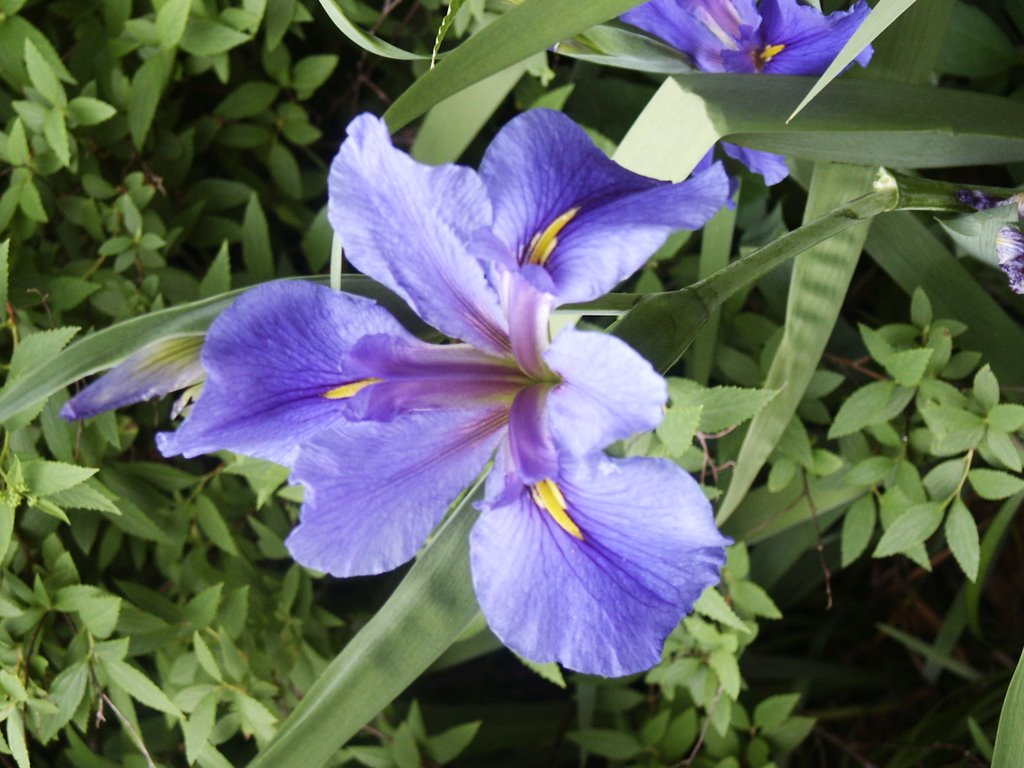
This Dutch Iris (I think) grows from bulbs, but may naturalize.

It’s an odd time of year to think about Irises, unless you happen to be reading of the mythological Iris, who took messages to the gods along the rainbow to the ends of the earth and lead the souls of women to the Elysian Fields.

The blooming Irises are named for the goddess because of their many colors. Most of them bloom in spring and summer – or not at all.

“Why didn’t my Iris bloom?” is a question I hear a lot, and I even heard a caller ask that of Roland Austin on South Carolina ETV’s “Making It Grow” the other night. Roland’s answer was, predictably, “It probably needs dividing.”

So, when and how does one go about dividing an iris? If it’s a Bearded Iris, this is the best time of year to go about the process. Here is a short version of how.

First, carefully dig and lift the Bearded Iris rhizomes out of the ground. The rhizomes are the long thin tuberous things with whispy roots growing out of them, from which the iris grows. Next, with a hose, clean off all the soil clinging to the rhizome so you can see what you’re doing. Then, cut off the leaves to about six inches. This will remind the rhizome to quit worrying about growing leaves and worry about growing next year’s flowers.

When you can clearly see the rhizome, inspect it for borers and rot. Get rid of any problem areas. Then, using a disinfected knife or pruner, separate the rhizomes into pieces at least three inches long. A fork in the rhizome is a good place to make a cut. Be sure each piece has healthy roots attached to it.

When you’re ready to replant your divisions, and you should replant as soon as possible, dig a shallow hole, about 2 to 3 inches deep and wide enough to spread out the rhizome’s roots. Make a mound in the center of the hole, just above soil level. Soak the soil in the planting hole and place a rhizome division in the center of the mound, spreading the roots around and down the mound. Cover the rhizome with no more than an inch or 2 of soil. “Like ducks on a pond,” is the rule of thumb for planting the bearded iris rhizomes. Plant them too deeply and they won’t bloom.

I found a great website with photos and complete instructions for dividing our bearded iris at www.gardening.about.com.

There’s another iris that I once loved, that used to bloom beautifully in my garden every spring. The delicate purple Siberian Irises are my favorites, but they produced nary a blossom this year.

Siberian Irises grow in clumps and mine, sad to say, have taken on a suicide pact with the clumping liriope that grows around them. Though they can be transplanted now, Siberians may do better to wait until spring to be split apart and divested of the grassy interloper. That is a chore I should put high on my list.

I should simply dig up the huge clump, divide it up with a sharp knife, try to pull out all the liriope, and put a piece back in the same spot it came from. Then I can share the rest.

Monday, September 04, 2006

The Only Solution to September Mayhem May Be a Good Freeze


Morning Glory is thick as kudzu, reaching up into the sweetgum tree, twining around the rose bush, and covering the daylilies with a blanket of its heart shaped leaves. I have let my garden get away from me once again. Chaos reigns.

I think of leveling the whole mess and starting over, but decide against it. The morning glory flowers are dazzling on cool, September mornings, and I know there is not much to see beneath them.

Dozens of other interlopers have shown up around my garden, thanks to my inattention. Volunteer hackberry, wisteria, smilax, and Carolina cherry are the primary invaders. Elegant eleagnus bursts through on occasion as well.

Hole Number 9 at Augusta National is named Carolina Cherry, so it can’t be such a disreputable shrub, though Prunus caroliniana, is an opportunistic plant that tends to pop up whenever it can. With shiny, simple, alternate, evergreen leaves, it has black fruit that birds love to eat. The bark is gray-brown and smooth on young stems, becoming grooved and scaly on older stems. Carolina cherry is respectable enough to be sold as a landscaping tree, claiming kinship to other cherry laurels, such as Otto Luyken. It’s shade tolerant and can make a good border shrub.

Hackberries are tolerant of a variety of soils and climate conditions. For those reasons, you can see them popping up through the most well-manicured and densely planted borders. Its pale green, diaphanous leaves make an airy canopy above the warty trunk. I suppose a golfer would shy away from a hole called “Hackberry,” but the berries of these trees are a favorite of birds and a host of insects, such as the hackberry woolly aphid that develops on the leaves. The sticky “honeydew” from this insect rains heavy onto whatever sits beneath it, and if the object happens to be your car, you’ll want to do some serious pruning or resign to giving your car a daily bath.

The sound of Bill Peterson's old truck alerts me that he has arrived to take down the blasted tree, after years of suffering through sticky windshields and sooty leaf drop. Its loss will mean our thicket a little less thick, but our cars are a little more clean.

There are somewhere between 200 and 300 species of smilax vines, several of which can be found on the edges of my garden. The thorny catbrier has a pale, droopy leaf and we could surely do without it. But the handsome, smooth stemmed lanceolata always shows its glossy evergreen leaves best at Christmas when we can adorn our doorways and mantles with the stuff, just like our great grandmothers did before the days of twinkling lights and vinyl pine swags.

Virginia Creeper has taken a strong hold around my garden as well. This vine, with its leaves made up of five pointed leaflets, can be useful in covering a wall or fence, but it can be invasive. It is handsome in the fall when its leaves turn ruby red.

I read suggestions every year about planting marigolds now instead of mums, since the flowers will last longer and they’ll put on a better show. The suggestions hasn’t leaked to the garden centers, however, and the choices for adding color to the faded flower beds seem limited to mums and asters. It’s too soon to plant pansies, since we’ll have more warm days, so I spend an hour pulling up the weeds near the back door, fertilize the roses one more time, hunker down and wait for a freeze to do the rest of the cleaning for me.

Sunday, August 27, 2006

Flower Children Need Love, Too


Henry Shaw was an Englishman who moved to St. Louis, Missouri in the early nineteenth century and later became instrumental in establishing the Missouri Botanical Garden.

Shaw never married. His real love was his garden. A story is told that a lady visitor was amazed that he could remember so well the names of the garden’s rare plants. “Madam,” he is said to have replied, “did you ever know a mother who could forget the names of her children? These plants and flowers are my children. How can I forget them?”

Well, sad to say, if my flowers were my children, I’d probably be hauled into family court on the grounds of neglect.

There are, fortunately, a few late summer bloomers that can take the heat and my periodic negligence. Purple Coneflower (Echinacea purpurea) is one of my favorite summer flowers with dusty pink daisy-like flowers that start blooming in mid-spring and keep right on into the fall. The dried flower heads bequeath hundreds of seeds that can be left to self seed or harvested and started in flats for next year’s bed. Go ahead and get them started now. Don’t wait until spring.

Shasta Daisies (Chrysanthemum X superbum) inhabit another corner of my side bed and are still going strong now in late August. Shasta daisy is a member of the Asteraceae family and is a hybrid created by Luther Burbank in 1890. The name “Shasta daisy” is said to come from the fact that the clean white petals of the daisy reminded Burbank of the snow on Mount Shasta in California. This cheerful, sun-loving, long-lasting daisy has white petals surrounding a yellow center atop sturdy stems that make it great for cutting. Leucanthemum ‘Becky’ was named the 2003 Perennial Plant of the Year by the Perennial Plant Association. Like the coneflower, it starts blooming in spring and will last into fall. Just give it sun, regular water, and keep it groomed. It will reward you with years of beauty.

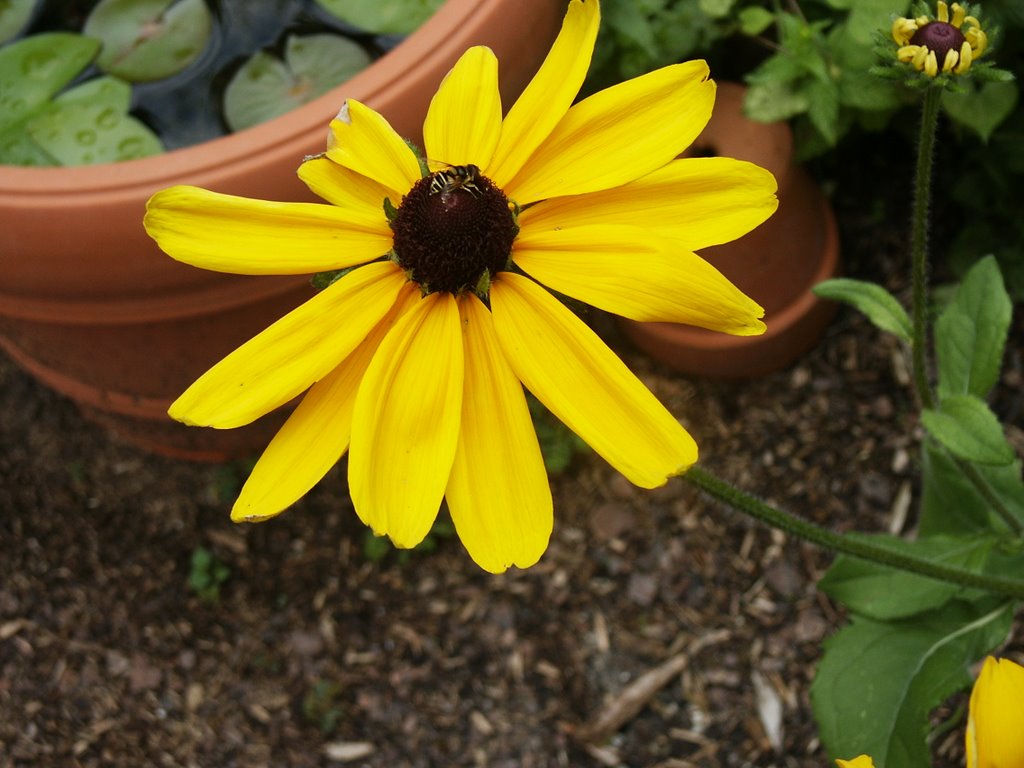
Black-Eyed Susan (Rudbeckia fulgida) is yet another popular, sun-loving perennial that makes a good cut flower. It tolerates poor soil and drought and blooms from summer into fall across a wide range of climates. ‘Goldsturm’ grows about three feet tall and was honored by the Perennial plant Society as the 1999 Perennial Plant of the Year.

Autumn Joy Sedum must be one of the hardiest plants in my garden and, though we don’t get the bright flowers that appear in cooler climates, there are flowers still, and this sedum is certainly worth growing for its foliage. There are hundreds of plants in the huge and varied sedum genus. Some are low-growing. Others are upright. Most are succulent with thick, fleshy leaves. The best thing about the sedums in my garden, I think is the fact that in the deep, dreary winter when the garden is bare, you happen upon a pot of them and already the new baby plants have begun their spring journey.

Salvia leucantha, or Mexican Bush Sage has tall, deep purple flower spikes that don’t show up until late in the summer. It’s worth the wait, however, and this handsome tender perennial graces gardens from the upstate, where it’s not likely to survive the winter to Charleston, where it probably will. In my salvia madness period in early spring, I bought a pot and left it on the west side of the house where it doesn’t get much water. It’s hanging in however, and will burst forth any day and last until frost. I might have sheared it back a few times during the summer to get lusher blooms.

So, at least my more resilient flower children have nearly made it through another Aiken summer that seems to be getting hotter as we plow into September. Maybe when it cools off I will become a more attentive mother.

Wednesday, August 16, 2006

Aiken's Weather Suits Tung to a T


Aiken city horticulturist Tom Rapp tells me he had several problems when trying to replace the Bradford Pear trees planted up the Laurens Street Hill near Aiken's famous fountain. Bradford Pears, though quite eye-catching, tend to split as those trees did, so he didn’t want to plant more of them. Bell South had a large line under the planting strip and recommended that the city not plant any big trees there.

Tom searched for something unusual that would be attractive, fairly drought tolerant and hardy and that could take whatever stress might come from standing so near the street. Aleurites fordii, or Tung Oil tree, was his pick, and that it what is planted there today. Though they look a little scrawny now, they promise to spiff up that spot come spring.

According to Floridata, a website that gives in-depth information about many flowers, trees and shrubs that grow in Florida, Tung Oil trees grow best where summers are long and hot and temperatures are consistently warm day and night throughout the growing season. Aiken sounds like the perfect spot.

The Tung Oil tree is a spreading round-crowned deciduous tree that should grow to about twelve to twenty feet tall. If you’ve ridden by, you can see the leaves are large (3-5 inches) and heart shaped. In the spring, before the tree leafs out, we can expect to see creamy colored blooms, growing in clusters.

After they’re pollinated by honeybees, the female flowers develop into two to three inch round fruit that contains nut-like seeds. The oil from these seeds is used as a waterproof coating for wood and as a drying agent for paints and varnishes. It has many other industrial uses.

Tung Oil trees like slightly acidic soil, thoughthey will tolerate a wide range of soil types.

All parts of the tree, especially the fruit, are toxic.

Like the Bradford Pear, this Tung Oil tree promises a handsome display to announce the arrival of spring.

On a visit last year at the home of Gloria Farmer, mother of well-known South Carolina horticulturist Jenks Farmer, Jenks cut open a Tung Oil fruit to show the valuable seed inside.

Friday, August 11, 2006

Not So Far from the Madding Crowd


St. Thaddeus Church and the churchyard surrounding it stand between busy U.S. Highway 1 and a spot that is, for nine months a year, the Mead Hall school playground. It doesn’t sound like a spot you would go for quiet meditation. Nevertheless, it is a peaceful place. Old live oak, cedar, and magnolia trees tower over dogwood, camellia, an assortment of colorful annuals, perennials, and an historic graveyard.

Some of the graves and some of the trees in the churchyard predate the Civil War. The flowers are new, however, and for this our congregation can thank the efforts of Tim Garvin. Tim spends hours of his time all year, tending these beds, experimenting with plants that will thrive in conditions that are sometimes less than ideal.

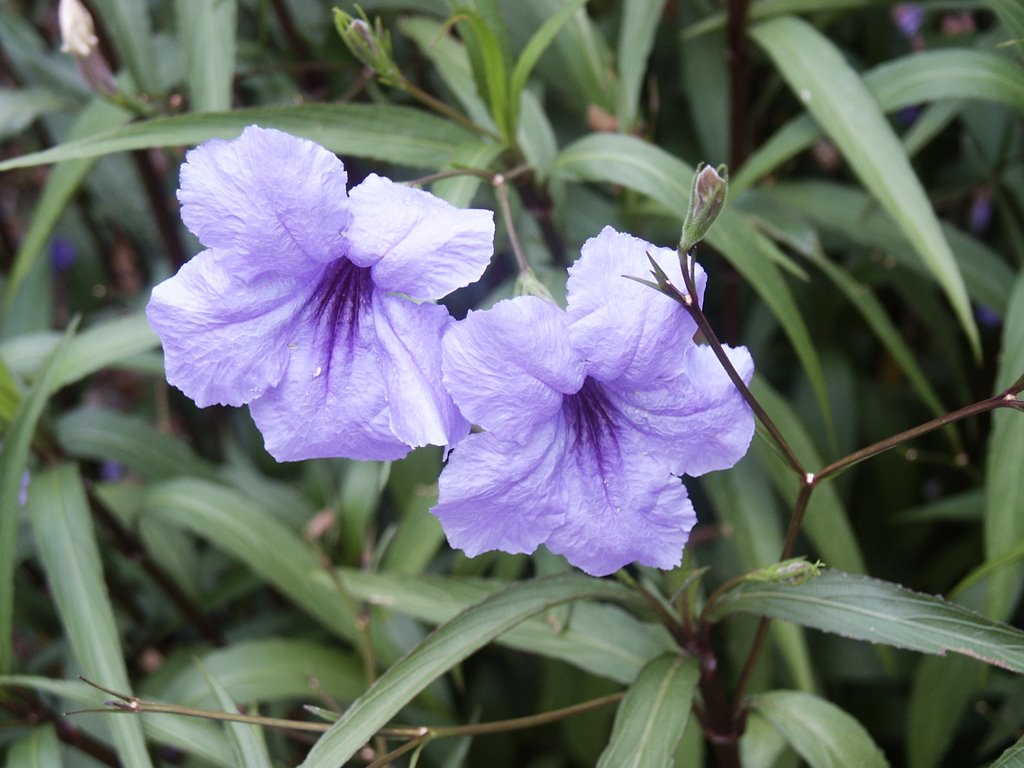
Soft purple Mexican petunia waves its willowy leaves along the drive.

Bengal tiger canna dances behind the brick wall.

Melampodium blankets the bed near the ramp that leads to the front doors.

Friday, August 04, 2006

By the Sea, By the Sea


You can drive from Aiken to Folly Beach, South Carolina in less than three hours. Only one stoplight slows you down after you get out of town, through Salley and North, past Bull Swamp and onto I-26 north of Orangeburg. It's a peaceful ride, skirting downtown Charleston and across the wide and easy James Island connector, out Folly Road to the Island.

Sea birds, outboard motors, and a violent Saturday night thunderstorm were just about the only sounds we could hear from the deck of the condo that overlooked the Folly River.

Oleander, not native to the area, but very much at home here, lines the causeway from the mainland, as it lines many of the roadways near the southeast coast. Other wildflowers catch you eye as well, if you risk jumping out of the car for a quick shot.

Can anyone identify this dainty pink flower I found growing beside the road?

Tuesday, August 01, 2006

'Spellbound' has me Spellbound


I shot a quick photo of the 'Spellbound' Rose blossom before we left town on Friday and it and the remaining blooms succumbed to the heat. This is a perfectly beautiful rose I added to my garden this spring and so far it's been quite happy there. 'Spellbound' is a hybrid tea with thick satiny petals and delicious coral blossoms. So far it's been resistant to black spot and keeps coming back despite the heat. The weather this week, with temperatures hovering around 100, will put it to the test.